
Anna Wargo: Sharing the Beauty & Resilience of Nature

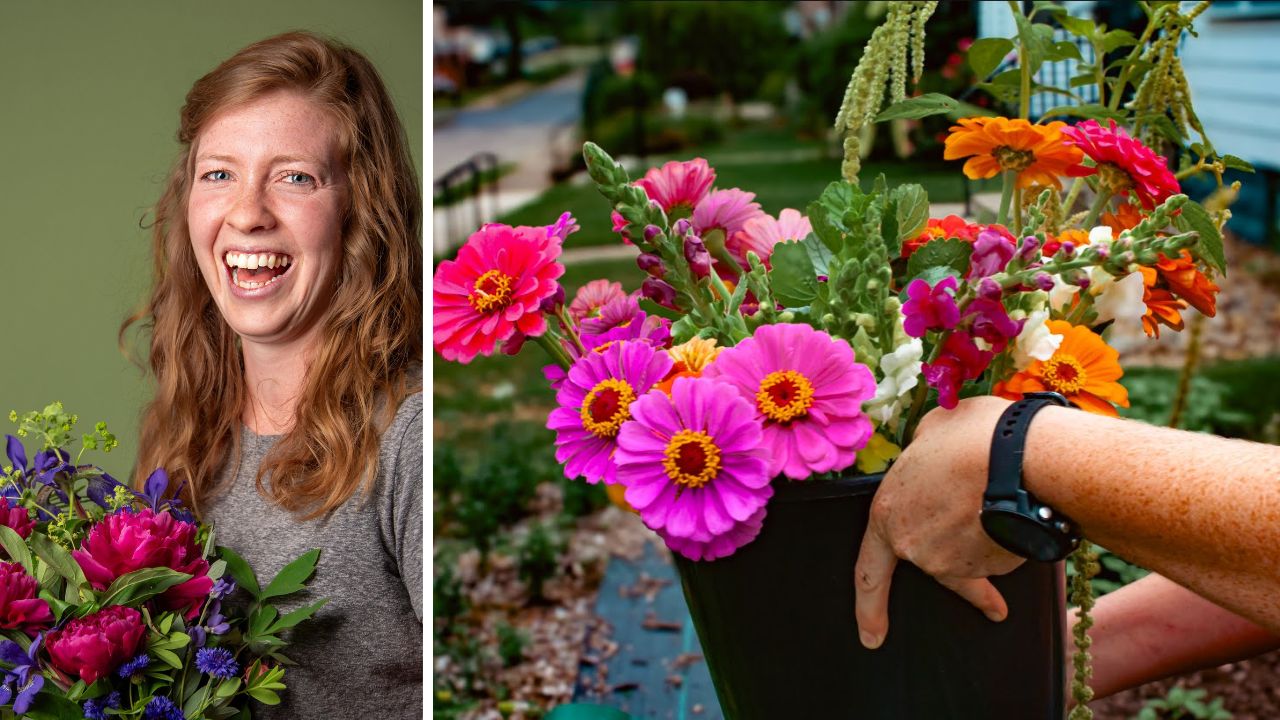
Whether through flower cultivation, middle level Spanish or history education, running, and beyond, Anna (Kluitenberg) Wargo ‘15 has a continuing curiosity for life and a desire to share its riches with others. Guided by a desire to serve her neighbors and be attentive to the world around her, she has crafted a life that encourages life-long learning, intentional community, and beauty.
A Running Start
Anna’s family relocated from Michigan to Pittsburgh during her senior year of high school when her father was transferred for work on a civil engineering project involving the region’s rivers. Eager to find a college where she could continue competing in cross country and track, she wasn’t interested in another big move — which brought Geneva College to her attention. At her final high school track meet, she heard a voice cheering her on from the crowd: Geneva’s track and field head coach, Brian Yowler. That unexpected encouragement sealed her decision to study in Beaver County.
She immediately began summer training and started college with a supportive team and welcoming coaches “already in her corner.” Her cross-country teammates quickly became close friends who supported each other on and off the field through personal obstacles and victories. As a teammate and eventually as a team captain, Anna learned how to care for others while maintaining boundaries — lessons that proved invaluable for every season of her life.
“There’s all these facets of life,” Anna says. “It’s fun to be with your friends and there’s a lot of meaningful time you can spend with people [while in school], but you’ve got to learn to slow down.”
As an upperclass student, Anna mentored younger teammates while continuing to develop her own sense of balance. Geneva’s emphasis on servant leadership resonated deeply, but it came with a healthy reminder:
“There is such an attitude of servant-leadership at Geneva, but never to the degree of destroying yourself,” she says. “There’s so much give and take [in community].”
Those rhythms carried into her first post-college role as a middle school social studies teacher. The demands of teaching, coaching, and mentoring were steep, and she leaned on the life balance she learned at Geneva to navigate the challenges. She had gravitated toward creative and thought-provoking courses in college — particularly those in history and sustainability — and brought that same curiosity into her classroom and beyond.
Experiential Learning
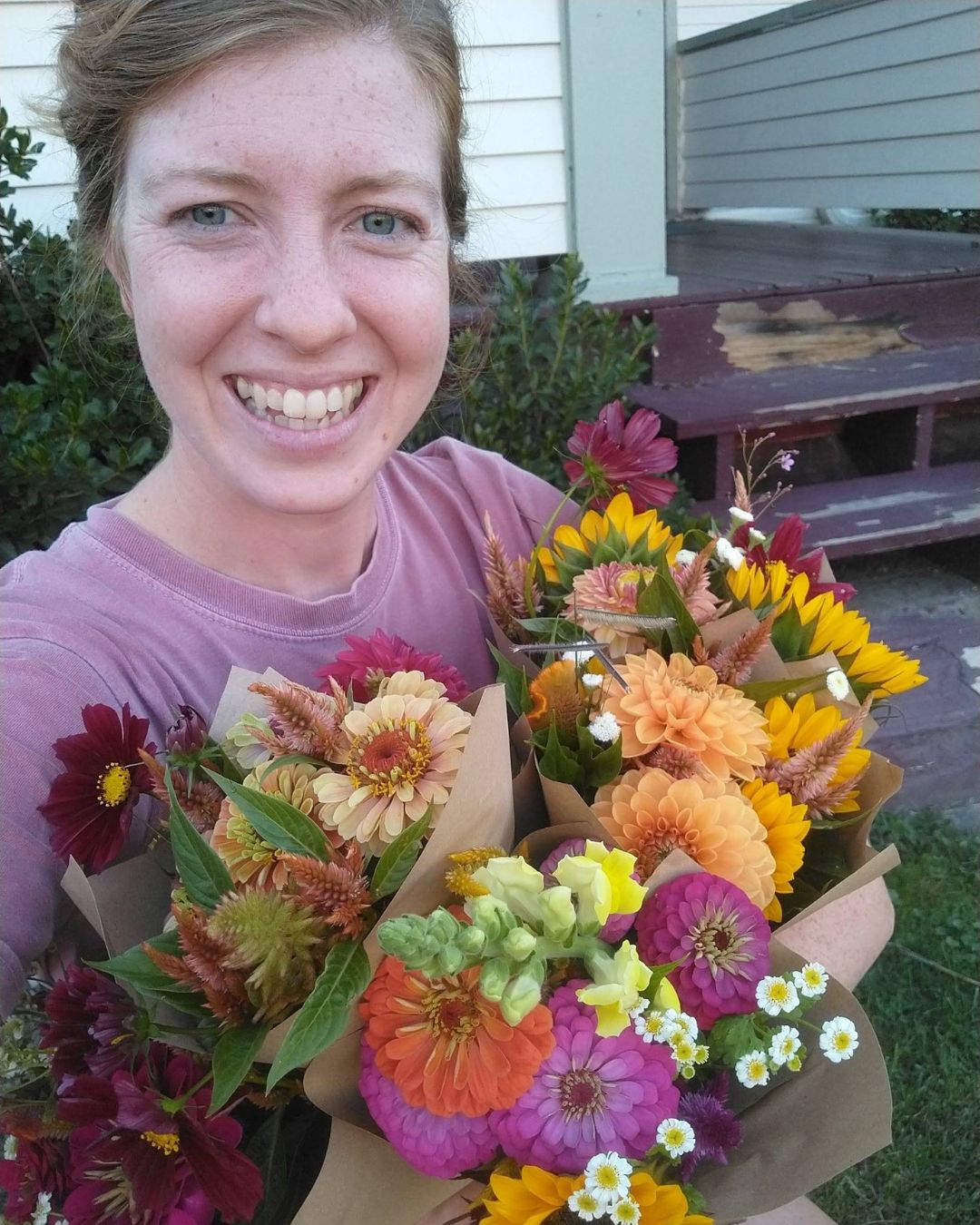
One course at Geneva on sustainability, taught by Eric Miller, PhD, encouraged students to sit in a particular outdoor space and then research its history at the Beaver County Courthouse. Anna chose a community garden in downtown Beaver Falls, overseen by a local church. That space became not just a research subject but a place of enjoyment and rest.
She had an opportunity to intern at the garden, facilitated through Geneva’s local engagement team in the Center for Student Engagement, which deepened her connection to the neighborhood. The garden, nestled along the Rails to Trails bike path, was part of her daily running routes — ones she often shared with Glenn ’15, her future husband and cross country co-captain.
Through experiences like these — hands-on internships, experiential classwork, personal routines — Anna grew to love Beaver Falls deeply.
“[My education] was rooted in this place,” she says. “I feel like this is the best place on earth.”
After graduation, Anna married Glenn and began teaching at Beaver County Christian School near Geneva. She taught middle school social studies and launched new programs in Spanish, cross country, and track. As they welcomed their sons, Peter in 2019 and Micah in 2021, Anna reassessed her commitments and chose to scale back.
Her flexible schedule, combined with Glenn’s career as a professional counselor, allowed their family to explore a balance that worked for them. Anna cycled through various roles — part-time teaching, deeper church involvement, and full-time parenting — but something was missing. Postpartum depression, coupled with the isolation of early motherhood during COVID-19, left her searching for something more in her daily routines.
“What can I add? What's too much?” she recalls. “Now I’m trying to figure out how to use my curiosity and interest and be outside and make sure I have enough movement in my days [while experiencing postpartum depression] ... how do I build a job for myself that fills me more than it takes from me so that I can be present with my family?”
The answer came in the winter of 2022 when Anna stumbled upon a documentary on the emerging cut-flower farming industry in the U.S. The subject clicked. Her family’s deep agricultural roots — on both sides — combined with a love of beauty and nature made the idea personal and promising.
Her father’s parents had immigrated from the Netherlands after WWII. Her Opa, a soil scientist who worked with the polder system previously, continually found ways to rebuild and repurpose idle items, even when his credentials didn’t translate to American job opportunities. On her mother’s side, the Vanderweides of northern Michigan ran a farm that became Dutchman Tree Farm — currently one of the largest Christmas tree suppliers in the country. Anna grew up learning about agriculture from her mother and grandmother while caring for the massive family garden.
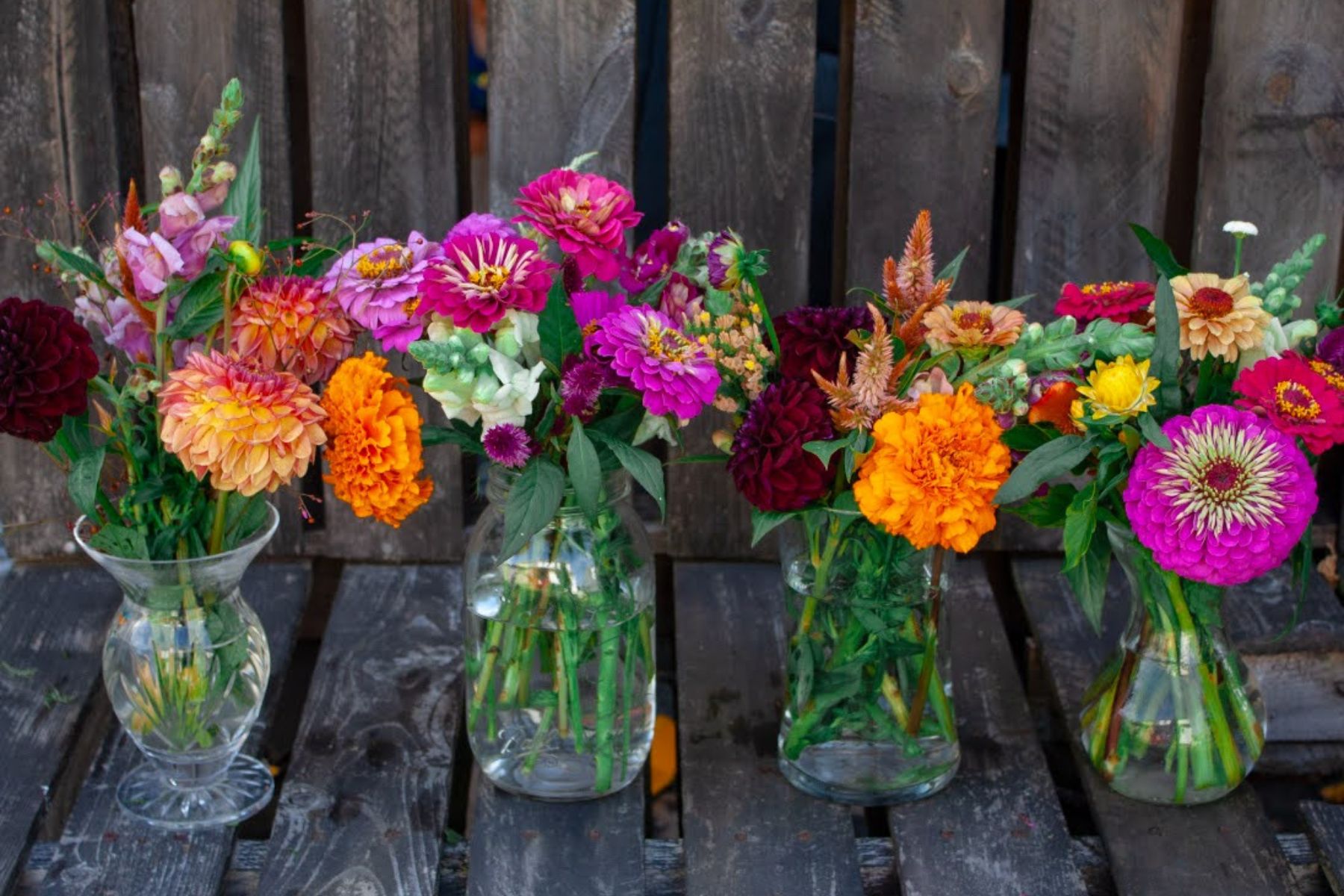
“We think to feed our bodies, but we have to feed all of ourselves by having beauty around us. Every stem you see in a grocery store is grown overseas and shipped here, so you have these massive farms [that sell in bulk to the U.S., but] flowers should be cheaper than they are,” explains Anna. “If the flowers are locally grown and you’re buying what’s in season, it should be the cheapest thing out there.”
With minimal space needed and kids at home, flower farming felt like the right fit. She started planning during daily routines — between dishwashing and diaper changes — envisioning a small business that could nourish both herself and her community.
“That winter, [planning my flower garden] gave me something to focus on that got me through a challenging, monotonous season.”
Ginger Gardens Blooms
That vision became Ginger Gardens. In her first year, Anna sold flowers grown in her backyard at local farmer’s markets, pop-up events, and a new community grocery store. Her focus was on restoring joy to herself while serving her neighbors.
“Serving the community is something that feeds me, and that’s what I need,” she reflects. “I was giving so much to be at home with my kids, I needed to find something that would feed me.”
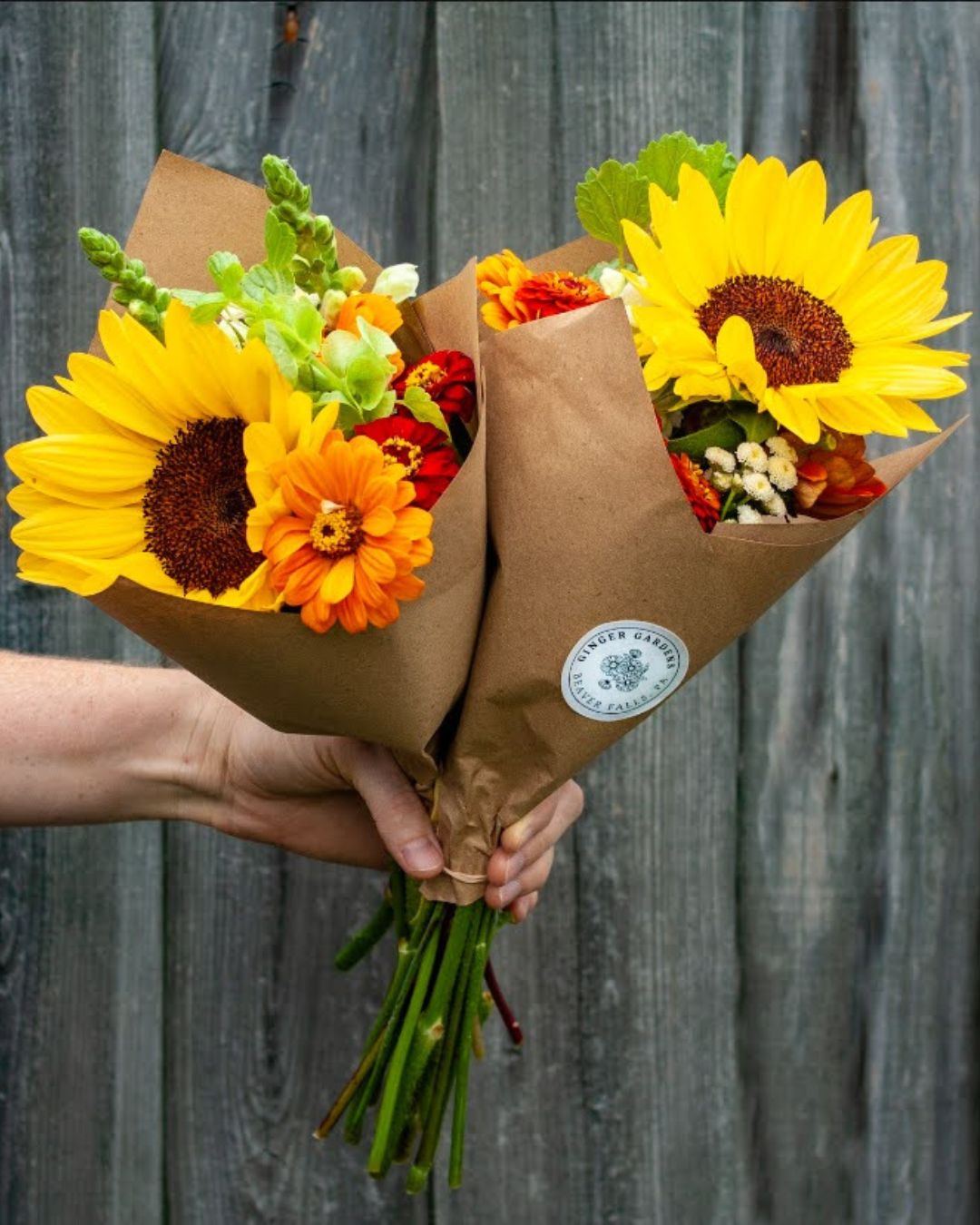
Now three years in, Ginger Gardens stocks bouquets twice weekly at Beaver Falls Coffee and Tea, Milk House Meats, and Health Hut. Customers can order fresh flowers by the budvase, mason jar, or bucket on her website or through arrangements in local florist partnerships. Geneva College even sources buckets of seasonal flowers for campus events.
She grows out of three spaces: her own yard, a neighbor’s property on College Hill, and Lion Hill Farm, run by Geneva alumna Bethany Williams. Each site presents unique challenges with soil, shade, and water, but Anna works with, not against, nature to determine what’s available that season.
“You enjoy a flower?” Anna laughs. “Well it’s not coming around until next year, so enjoy it this week. Next year, we’ll look forward to it again.”
Her reliance on natural growing patterns invites her customers into the rhythms of the seasons and provides opportunity for outdoor education. She also cares for a flower bed at local children’s museum Neighborhood North in downtown Beaver Falls.
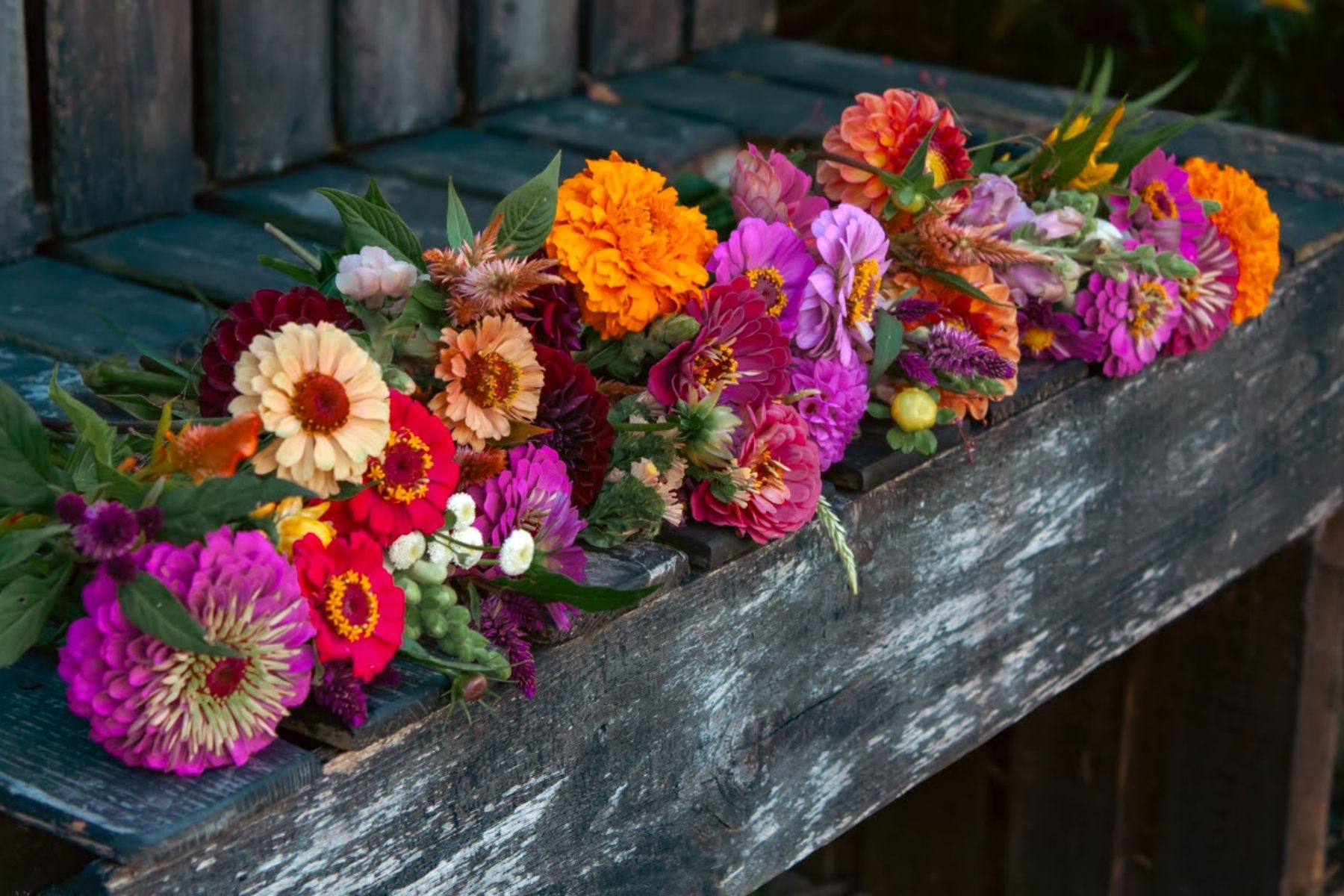
Anna uses no-till methods, layering compost, cardboard, and mulch to protect soil ecosystems. She gathers materials from neighbors and local sources, embodying her community-first mindset.
At Lion Hill Farm, she incorporates sheep wool and manure into the beds. Seasonal patterns guide her planting and sales: early bulbs sprout in March, a variety of flowers blossom through November, greenery sells in December, and dried flowers brighten rooms in January. She’s even testing indoor tulip cultivation for Valentine’s Day.
Anna’s life-long learning is core to the way God designed her, reflected in her curiosity and resilience. From middle school classroom teaching to cut-flower workshops in the community and organic relationships, she encourages others to approach life with this same interest and passion.
What’s in her choice bouquet?
“Feverfew because it’s super healthy and sparkly; peonies because they’re bright and bold;” — and transplanted from her grandma’s garden in Michigan — “columbine, ferns, and iris because they grow wild in the woods ... they’re not flashy, they just exist.”
By Erika Kauffman ‘20