
2023 Commencement Address
Pro Christo et Patria again, and again and again- Home
- Commencement
- Speeches
- 2023 Commencement Address
Geneva Alumnus and former Professor at Regent College, Dr. Steven Garber, delivered his commencement address entitled, Pro Christo et Patria again, and again and again to the class of 2023. The transcript and video recording of his address is featured below.
Dr. Steven Garber, Beaver Falls, PA - Saturday May 6, 2023
Family and friends, faculty, staff and administration, and especially to you, Brad Frey, and most of all honored graduates. It's a gift to be with you this morning, gathered as we are along the beaver vale, to witness the commencement of these men and women from Geneva College into the rest of life.
Pro Christo et Patria, the words of the College seal invite us in, reminding us along the way, what is central to the College's identity and mission. And then as we leave, calling us to remember what this was all about, never just about me and mine, but somehow deeply, even profoundly a way of seeing that makes sense of the world, of my place in God's world. Yes, they're meant to be the words of learning, and a way of learning that becomes a way of life mysteriously and wonderfully of my good written into the common good. My honest faith in the Lord who was Christ, who makes sense of the world around me, of homes and homeland, of neighbors near and far, of vocations that see our most personal relationship to the God of heaven and earth, woven together with our most public responsibilities for a life in the world. Yes, Pro Christo et Patria.
My father's grandfathers were stonemasons who spent years of their lives bringing Old Main into being. Into the generations that followed. My father was born on College Hill, just a few blocks from here. After my father's Beaver Falls high school years, he became a student at the neighborhood college alongside his boyhood friends. But in the early 1940s, World War Two interrupted history and my father's education too. Before he left for the war in Italy, he made promises to my mother, who'd come from Colorado to this college on the hill above the Beaver River promises and hope that someday, somehow, he would become her husband. When the war was done, he got on a bus it took him into my mother's arms, and into a longer story that is full of its own loves and longings. 25 years later, I made my way to here too, driving across America, in a VW Bug. Finally, upon Finally, on to this hill, College Hill.
Among many moments that mattered, I began to ask questions in those years what I've been asking ever since. Questions about the point of learning, and the point of life, why college anyway? What was it supposed to be about? And of course, there were deeper questions about me. What was the point of my life? Was there a reason for being that made sense of my learning, and of my life? In all the classes that were mine, I found books that began to make their way into the way that I think about the world. Some, in fact, that I'm still reading because they were good books by good people. Once it mattered then, and still matter years later.
I think at the insightful theater Roszak, who's writing about American culture was shaping for regeneration. Books like the Making of a Counterculture and Where the Wasteland Ends became integrally important in my senior thesis, and years later had been building blocks for the way I see history of the 20th century. And even now into this century. In those years of watching the world, the sociologist Roszak began to watch the church to making this awkwardly honest assessment of Christian belief, as he saw it, quote, "They have a faith which is privately engaging, but socially irrelevant." Faith meant something to them personally but had no meaning for the wider world. And that dissonance intrigued him as it perplexed him. Pro Christo, but no et Patria.
But I also read the great French professor Jacques Ellul and his book The Meaning of the City, which I've been reading again in these last few months, having first bought it in the campus bookstore many years ago. The heart of Ellul's work were two questions What about his own place in the world? A human being who asked who wanted to be a true Christian too. But also France's place in the world before, during and after World War Two, and then on to the cities and societies of the century that followed. A wise man, a courageous man, a brilliant man, Ellul gave himself to the deepest, truest questions in the universities and colleges the world over the most secular spirited ones, as well as the most seriously Christian ones.
Ellul read everyone, and everyone read Ellul, and some like me still are. Very simply said his questions were questions that human beings asked and answered, at the heart of every man and every woman's life as they were a generation later. There are questions to there, in fact, the questions at the core of Geneva's curriculum, and it's very reason for being. The crash of a self within society, of an individual life and the life of the institutions of the world. Phrased simply, they are the questions about me about my relationship to We, the question of my life and of our life together.
If we're listening carefully to this challenge, there is no more astute book that's been written during these years if you're coming of age, then one simply titled Alone Together by Sherry Turkle, the MIT professor who writes with surprising insight about being alive in the 21st century, our technological society, the age of iPhones and more. We're on all the time, and connected all the time. Wherever we are, whatever we're doing, and yet, and yet there's a deepening sense of being alone in the world to not really knowing and really not being known.
Even this week, the US Surgeon General issued a more alarming report, naming loneliness as a plague upon us, a plague with debilitating consequences for us. Yes, together we are, and yet still alone, together. Her observations about us are as chilling as they are telling. So very attentive she is to now to the social meaning of this time in history. But as true is this is it's important to note that what she sees about the days of our lives, is not new under the sun, and has in different ways been the great challenge in every time in every place. How do we hold together, the me and the we, my good with the common good?
If this for a moment seems like something more academic than you imagine coming to Geneva's commencement this morning, then think we've got every marriage you've ever known, always and everywhere, marriage is a dance of me and we are at its best, holy and happy together. And at its worst, the source of the saddest sorrows, human beings ever know. And that dynamic truth winds its way into life for everyone, everywhere, as true for families as for marriages, as true for neighborhoods as for families, as true for cities, as for neighborhoods, as true in Singapore, as in State College. Yes, me and we, again, and again, on a day like today in a place like this. For 1000 good reasons, it's important to remember the professor and pastor whose thinking has more than any other shaped us as moderns in the modernizing world. As audacious as that may sound, in fact, his writing has captured this challenge through the centuries with far-reaching wisdom and unique insight. His deep understanding of God and the human condition in history makes all of us Augustinians whether we want to be or not.
In the fifth centpury, in a world seemingly far from ours, Augustine of Hippo wrestled with the same questions that we do the same questions that Roszak and Ellul did the same questions that are the consuming core of Turkle's work. In two of his best known books, he reflected on the character of the challenge, calling one Confessions and the other, The City of God. If one is the first autobiography, we know a remarkably honest reading of Augustine, life from before the beginning on page after page remembering the hours and days that made him him. Of his loves and longings, disordered and orders, of a life lived in and by and with God. And the other is his grand story of the whole of history of the whole of human life. Focusing in on what a life together means, andand does not mean it would take three human beings to flourish in the cities of their lives, and what terribly and tragically, it means we make decisions against our flourishing.
A great teacher thinking things through for his time, has been a gift for all time. Augustine knew what it meant to be human. Understanding that a good life is always about both me and we. Always wonder the reality of my life and our life, of my good and our good, of my faith and the meaning of my faith for the world around me. Yes, the personal and the public is self-revealing confessions and is expanding the City of God, Pro Christo et Patria. But to press in, honored almost graduates that you are, what about you? What's your life about what has your learning been about? We could walk across this stadium, seat by seat row by row and hear hundreds of answers to the question. What's Geneva College education about?
This morning, I offer you mine. A way of seeing the world that makes sense of the world. When all is said and done, when the ceremony is finished, when the commencement has happened, the question will be, are you someone who has formed a way of seeing the world that makes sense of the world? The very pluralizing, the very secularizing, the very globalizing world. Have you learned to make sense of that world?
Does your Pro Christo makes sense of your Pro Patria? As much as it matters to have the necessary knowledge required to make your way through the curriculum that comes into being along Route 18, more important will be this: will what you have learned, be honest enough, rich enough, true enough to give you the intellectual and moral grist to make your way into the rest of life? Will your theological maturity, be one with your professional competence, a coherent life rather than an incoherent one? On this day of all days, as you graduates will take your tassels and move them from one side to the other, saying to yourselves and the watching world, that you have commenced, that you're entering into history with new maturity, beginning your own pilgrimage across time, on into the hopes and the heartaches of the world with a deeper kind of seriousness, a more determined commitment to your own well being and to the well being of the world.
Pilgrimage is a good word, isn't it? The best stories we know are all stories of pilgrimage. It's reality threading its way through every life and every time. In the exodus to the Good Samaritan. From the quest of the holy grail to the Pilgrims Progress, from Robinson Crusoe to the Hobbit, from The Lion the Witch in the Wardrobe to the Last Battle. And yes, onto Jaber crow too. The best stories are always stories of journeys, stories of there and back again, time after time. We see ourselves in them and therefore our best stories are the truest stories, most faithfully and imaginatively true to what it means to be human. To say it clearly, being human is to be on pilgrimage, a story from here to there, and beyond. One of our best contemporary storytellers is the filmmaker Terrence Malick, whose work at large has earned him the highest honors from his moviemaking peers throughout the world. Perhaps you know, his recent A Hidden Life.
Set in Austria during the years of World War Two, the story of an ordinary man and an ordinary place of Franz Jägerstätter with his wife and children, farming their land, planting and plowing, hoping and harvesting all within the grandeur of the Alps until the Nazis come, bringing horror to his place and to his people. As must be the very good story that it is, it too is a story of pilgrimage of a life at home with fertile fields and majestic mountains onto a life within painfully and starkly gray prison walls of a man's quest to be holy and human, at the same time, to love God and His nation together. Yes, somehow, in some way, with the greatest weight of history upon him to live a life Pro Christo et Patria. And that is the story, the painful, poignant drama of the story. Not all of us will end up on the screens of the world. In fact, most of us will live more hidden lives, perhaps not known to the storytellers of history, but instead tenderly and wonderfully known to the friends whose friendship is woven into the fabric of our lives. Like my friend, Tim Russell, we met one evening in the depths of McCartney Library, me a senior and him a freshman.
When I graduated, we kept at it. But over time, he became a friend to my wife and children too. As I watched through the years, he became a friend to people wherever he went from the poor and powerful in Pittsburgh, then back here to Geneva, on to schools in Memphis and Boston then to Memphis again. Yes, he was a pilgrim, always a pilgrim, making his way into God's world, a man who loved God deeply, and who love people deeply. His great heart big enough for your life, and mine, for my joys and sorrows for your greatest happiness, and your greatest pain. A few summers ago, I was asked to speak in Memphis for a week on the meaning of vocation for the city. And I made certain that my long friend Tim had time to see me. After a very good breakfast at Tim's favorite cafe, we drove through historic Memphis, in particular, the places that were integral to the city's racial wounds. I'd asked him for several hours, wanted to hear about the deep-seeded conflict from him, an African American man who knew the city and still love the city. We went there. And here, he walked into this place, and then that one, sometimes lingering while he told me more than I could ever have known.
The end of the morning we walked to the motel where Martin Luther King was tragically assassinated. And on the way home, we ate a few of the almost homemade cookies we bought it in nearby shop, a place which promised made with love. The cookies were good. The juxtaposition was too much, something so wonderfully sweet and murder too. But Tim's heart was deep enough for at all. Even as he told me with the truest passion. I'm still angry. Seeing all that I've seen I was not surprised. Angry? Yes, he was angry at the wrongs angry at the evil angry at the indifference, and yet Tim loved his place and his people, which at the end of the day is the hardest work in the whole world. For the first time I met him, he was serious about serious things. The most important things were the most important things to Tim, the heart of everything he cared about me, even as he cared about we. Able and willing to probe by soul. He was nobody's fool, as wise as a serpent and innocent as a dove, asking the hardest questions about history and race, about economics and politics, about God and the world. He loved people, but he also loved places. He cared about my good, but never at the expense of our good, our common good, as honest about his sin and mine, as he would about his City's history of shames.
Dearly beloved, as you are, this business of holding it all together, is as difficult as it is crucial. A life of faith, yet a life in the world too. A true piety that penetrates into every square inch of the whole of reality, not only making sense of my life, but of our life together, it only becomes harder. Yes, the questions that I began to think through at Geneva, have become the questions of my life, wrestling with the meaning of my deepening faith for the wider world, those who took me to Washington, DC, to my own classroom of eager and serious students, who are learning to care about the world, learning to think through the concreteness of public policy and vocation, which are by necessity, always about me and we, about my good and the common good. This has been my life for the years of my life. Even through this week, where I've given the time of my heart to the formation of a foundation that's committed to rethinking the business of business, the character of vocation for life in the world. In the ironies of providence, this work is centered in Geneva, Switzerland, which is about a million miles of Beaver Falls, Pennsylvania, yet both places matter. Both are dear to me, critically important to my understanding of the world, the way it could be, and should be.
If this Christ of Geneva's seal is Lord of all, then everything has to be reimagined. Economics, yes, but the arts to an education in every way, that everything in every way. The most personal relationships to the most public responsibilities. Yes, 1000 times. Yes. That is the vision. The renewal of our things, a new heaven and a new earth. A longed-for universe, where finally and fully all said things become untrue. And yet, it is very now but not yet time. We're frail people. All of us aren't we? Our hopes and heartaches are bound together with fragility and tenderness, aren't there. But couldn't become signposts of the world that someday will be of a kingdom that we hope for with all of our hearts, how Jesus we pray, please hear our prayer. These are the perennial questions, ones that we keep asking and answering as human beings wherever we are to be found.
And on this day, I will say that through the graces of history, they're the questions that are written to Geneva's vision of learning and life, into its very curriculum, and very plainly, very pointedly, they're ones worthy of being written into your life for the rest of your life. Pro Christo et Patria for its 175-year history, these words have been Geneva College's raison d'être, it's very reason for being. They are wrothy words, ones that gives us a place to stand on the shoulders of history. True to what the most important learning is always about. Augustine of Hippo understood this, Bernard of Clairvaux understood this, Calvin of Geneva understood this, Kyper of Amsterdam understood this, Staut of London understood this, Teresa of Calcutta understood this, King of Atlanta understood this, and Tim Russell, yes, Tim Russell of Memphis, understood this.
And we should too. These weighty words becoming our words, words becoming flesh, in your lives through time and space. Yes, words becoming flesh in the lives in which you will become who you are and why you are. The Christ of Geneva's seal is the Christ of creation and consumation. The Lord of heaven and earth that is a center of history, in every century and every culture, one worthy of your heart and mine, of my faith and yours. Yes, yes, and yes, he is the Christ, who is the King of kings and the Lord of lords. Before him every nation will one day bow. The sovereign over the cosmos, who knows me and still loves me, who knows the world and still loves the world. And it's this Jesus who makes his vocation ours, calling us to him. Pilgrims that we are Pro Christo, but also Pro Patria. A calling to a life in the world is born of the truest faith and therefore is also worked out in honest hope for my country, and honest love for my culture.
Simply said, it is a calling to a seamless life, Soli Deo Gloria. One more day, in one more time, it is a question that Augustine pondered, writing for the ages, knowing that his life with him before God was foremost, confessing his dependence on God incarnate. And then because of that reality, arguing for his day and hours, that he was responsible to God for caring about his city and the world, about his time and place. For him as for us, it is individual life twined together with institutional life, it is my faith and hope and love, woven into the meaning of the common good. Yes into our commonwealth. There is no other world to live in in that world. There is no other life to live in that life. Yes, Pro Christo et Patria again, and again and again.
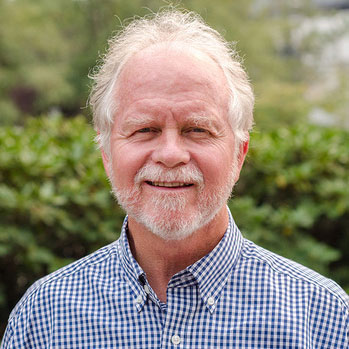
Speaker: Dr. Steven Garber '76
Dr. Garber, a Geneva Alumnus, is the former Professor of Marketplace Theology and Leadership at Regent College. He is the author of several books including The Fabric of Faithfulness: Weaving Together Belief and Behavior. A native of the great valleys of Colorado and California, Dr. Garber is married to wife Meg and together they have five adult children.
More About Steven Garber
 Online Course Login
 myGeneva Student Portal
