
- Home
- Graduate Programs
- Master of Arts In Counseling
- Master's in Counseling
Be a positive force of change in the lives of others.
The Master of Arts in Counseling program at Geneva College prepares you for a career as a mental health professional by giving you practical experience in a variety of contexts, centered around an academically rigorous Christian curriculum. Study online or on campus in one of three concentrations so you can pursue your interests and calling in a format that fits your life. Vetted by the Council for Accreditation of Counseling & Related Educational Programs (CACREP), our Master of Arts in Counseling program supports and shapes you to be a positive force of change in the lives of families, communities, and individuals. To contact the Geneva Graduate Admissions staff, email gradadmissions@geneva.edu or call 724-847-6505.
Woman Graduate student reading a publlication
Experienced & Accomplished Faculty
Program Overview
Throughout the Master’s in Counseling, students will understand the core knowledge of the profession, which includes developmental theory, career development, assessment, research, ethics, multicultural awareness, counseling theory, and group work, as well as training in counseling and helping relationships, all from a Christian perspective. Graduates of the master’s degree have found work in a variety of settings, such as schools, clinics, church counseling centers, and public and private agencies.
All three concentrations offered in the M.A. in Counseling Program are accredited by the Council for Accreditation of Counseling and Related Educational Programs (CACREP) through March 31, 2026, under the 2016 standards.
Students enrolled in Geneva’s Master of Arts in Counseling programs will complete a total of 60 credit hours both on campus and online with their choice of concentration in Marriage, Couple, and Family Counseling; Clinical Mental Health Counseling; or online only Professional School Counseling. All three tracks are accredited under the 2016 CACREP standards.
Students are taught by industry leaders that are among some of the brightest in the nation, constantly researching, learning and contributing to the counseling field. Their years of unique and eye-opening experiences are shared in the classroom, deepening students’ practical knowledge.
Methods of Instruction
The Master’s in Counseling program at Geneva College offers flexible learning options designed to fit your lifestyle and educational goals. Whether you prefer a dynamic classroom experience or the convenience of online learning, our program provides the support and structure you need to thrive on your journey to becoming a professional counselor.
The classroom delivery option provides students with a close-knit, relational academic learning community where courses run for the traditional 14-week span. Classes go beyond lectures, incorporating discussions, role-plays, problem-based learning, instructional videos, guest lecturers, formative and summative assessments, and flipped classrooms where instructors use class time dive into real-world applications before engaging with the material at home. With faith woven into the curriculum, students grow not just academically but as whole people—equipped to engage the physical, emotional, social, and spiritual aspects of life.
While our online course is structured differently than our on-ground curriculum, it offers a flexible yet rigorous learning experience, combining asynchronous coursework with live, interactive sessions. The accelerated 8-week course structure ensures comprehensive training through zoom video reviews, role plays, clinical demonstrations, and faculty-led discussions. In their second year, students complete a local practicum and internship with ongoing faculty supervision, preparing them for professional counseling practice while maintaining our commitment to the integration of faith and learning.
Given that 14 weeks of content are compressed into an 8-week schedule for online classes, the required level of time investment per week per course is considerably higher. In order to be successful, students must carve out a sufficient time each week given the accelerated pace. Prospective students often wonder, “How can I learn to be a professional counselor online?” We have deliberately structured our online program with this concern in mind. In each course, well thought out methodologies are utilized to help students not only obtain mastery over the course material but also to develop Master’s level counseling skills and interventions. Some of the most common methods of instruction in our online learning environment include audio-embedded PowerPoint presentations, video reviews, role plays, student presentations, clinical demonstrations, guest panels, reflection journals, meditative exercises, and examinations. While much of our online courses are asynchronous, each class has some synchronous elements through videoconferencing technology so that students can engage in professional presentations, practice specific counseling skills, witness panel discussions, and receive live instruction and feedback from faculty and other students. Our classes utilize discussion forums to help students engage one another and to internalize course content on a weekly basis.
In the second year of the program, online students will be supported in identifying a local clinical site to complete their practicum and internship experiences. In the practicum and internship experiences, students provide master’s level counseling services to clients within their communities under the direction of a site and faculty supervisor. During practicum and internship, students will receive synchronous (live), weekly faculty supervision through Zoom to help students to refine their counseling skills and prepare you for professional practice. Our online MA in Counseling program offers students maximum flexibility without compromising the learning process so that students are well prepared to serve God and neighbor as professional counselors.
All MA in Counseling students will participate in a one-time, 5-day residency in late August on Geneva's main campus in Beaver Falls, Pennsylvania. Students will receive an orientation to our MA in Counseling program as well as an orientation to online learning at Geneva College. During this week, students will complete a 3-credit course in professional issues and ethics with a community of learners and experience a special time of exploration, growth, and collaboration under Christ.
During this week, students will complete a 3-credit course in professional issues and ethics. As part of this class, students will receive an orientation to our MA in Counseling program as well as an orientation to online learning at Geneva College. Students will also have opportunities to create their plan of study with their faculty advisor, explore their vocational calling within the counseling profession, and build program camaraderie through social gatherings. We have learned that students will take these collegial relationships forged during residency with them into the profession long after completing our graduate program.
Lodging, transportation and meals are not provided by Geneva College, but students are given an opportunity to connect with each other ahead of time through email chain prior in order to coordinate transportation and other travel logistics if needed. Lunch is available for purchase in the Alexander Dining Hall on the Geneva College campus during the week. Students will be given information for lodging with any applicable discounts associated with the Geneva College.
99% of Geneva students pass the National Counselor Exam on First Attempt
Mission
The mission of the Master of Arts in Counseling Programs is to educate, supervise, and mentor students to develop knowledge, skills, and personal awareness necessary for them to function as professional counselors. The Master of Arts in Counseling Program promotes excellence in professional preparation by providing a comprehensive education that integrates an understanding of Christian faith with professional counseling in a variety of religious and secular settings. The programs are based on a holistic biological, psychological, sociocultural, and spiritual understanding of human development. In addition to general counseling proficiency, students specifically are trained to become Marriage, Couple, and Family, Mental Health, or School Counselors.
The mission of the Marriage, Couple, and Family Counseling Program is to train students in the knowledge, skills, and practices of counseling in order to provide competent care for individuals, couples, and families within a multicultural and pluralistic society of embracing (1) a family systems orientation to counseling, (2) the highest ethical standards of the profession, (3) an exploration of the person of the counselor, and (4) professional development through participation and leadership in professional organizations.
The mission of the Clinical Mental Health Counseling Program is to train entry-level counselors capable of functioning competently and ethically in mental health delivery environments wherein they work from an overall developmental/wellness model utilizing a neurobiopsychosocial framework that employs systematic and culturally sensitive intervention strategies.
The mission of the School Counseling Program is to prepare school counselors capable of supporting the academic, career, and personal/ social development of the students whom they serve, P-12, through (1) the use of data to inform school counseling programs and practices, (2) excellence in knowledge and practice, (3) integrity through adherence to codes and standards for ethical practice, (4) management of their own professional development, and (5) competent school counseling and educational practice.
Philosophy
Professional counselors use various interventions to facilitate wellness, personal growth, and mental health among those whom they counsel. A multidimensional holistic view of persons examines the interplay of physical, psychological, social, and spiritual aspects of life. The practice of professional counseling is based on knowledge of mental health, counseling, and human development principles and involves cognitive, affective, behavioral and systems interventions and strategies.
The Clinical Mental Health Counseling concentration equips students with a multidimensional viewpoint that takes into account the relational aspects of an individual’s social, spiritual, psychological, and physical health.
Program Requirements
All students in Geneva's Counseling program must complete the following core courses:
An exploration of understanding of mental illness. The study of the classification, etiology, and treatment of psychopathology and personality disorders. The course deals with the Diagnostic and Statistical Manual of the American Psychiatric Association (DSM) categorization of criteria for specific diagnoses.
An introduction to descriptive and inferential statistics. Topics include descriptive statistics, bivariate distributions, sampling, estimations, and tests of hypotheses.
Basic individual and group assessment techniques, test item construction, reliability, validity, and standardization, Students will become familiar with authentic, screening, diagnostic, formative, benchmark, and summative assessments relative to decision-making. Students will critique various assessment instruments (intelligence tests, ability tests, achievement tests, screening tests, interest tests, and personality tests) used by counselors. Socio-cultural factors, ethical factors, and legal codes relative to assessment of special populations, diverse learners, and English language learners will be addressed.
510 - A study of basic concepts of evangelical and Reformed Christian theology with special emphasis on biblical anthropology and the way it informs and critiques various counseling theories.
511 - Students will examine philosophical assumptions of major counseling theories and apply empirically verified modalities and techniques that can be faithfully housed within the Christian tradition. Students will learn to administer formal and informal assessment tools, as well as adopt counseling theories and clinical interventions which will enable them to competently address the religious/spiritual dimension of client functioning in culturally and ideological diverse treatment settings.
Course provides the student with the necessary skills to professionally evaluate the current research in the field of counseling. Topics include research strategies, scaling and coding, internal and external validity, and program evaluation.
An exploration of major events in human development from conception through death. Developmental concepts that have universal application will be covered.
A comprehensive overview and integration of the major theoretical perspectives on the counseling process. An examination of the historical development of counseling theory, an exploration of affective, behavioral, and cognitive counseling theories, and the application of theoretical material to case studies. Foundational elements of the counseling process will be explored via academic activities and observation and critique of videotaped master therapist counseling sessions. Students will develop an initial personal theoretical orientation for counseling endeavors.
521 - A comprehensive overview, integration, and application of major theories and techniques employed in the counseling process. Specific advanced counseling interventions by master counselors will be reviewed via videotape and critiqued. Initial counseling skills will be developed via in vivo role play and will be reviewed and critiqued by the instructor. Basic models and strategies of consultation will be explored from theoretical and pragmatic points of view, and applied to case material.
579 - This course will focus specifically on counseling skills used to work with children and adolescents. It incorporates both the American School Counseling Association Personal/Social Domain standards for students as well as CACREP standards. Students will learn evidence-based best practices and user-friendly techniques for counseling this unique and often challenging population. The integration of the child’s faith into assessment and treatment will also be discussed.
A survey of theory and practice of counseling associated with career selection, career development, relationships among career, life-style, and family, and relevant appraisal tools.
Theories and techniques of effective multicultural counseling to include consideration and appreciation of cultural, racial, ethnic, disability, gender, language, and other diversity issues within a pluralistic society. Students will examine role of the counselor in advocacy, conflict resolution, cultural awareness, and work with English Language Learners.
Elements of group dynamics, ethical issues special to group work, and group leadership skills. Students will compare four types of groups—task and work groups, psychoeducational groups, counseling groups, and psychotherapy groups. Various theoretical approaches to groups counseling as well as adaptations with diverse populations and specific settings will be addressed. Includes a 10-hour group laboratory experience.
Courses included in the Clinical Mental Health concentration:
A survey of professional identity, ethical standards, and legal codes for marriage and family counselors and therapists. Topics will include: 1) history and philosophy of the counseling profession; 2) knowledge of professional roles including consultation and group work; and 3) moral principles and virtues in counseling practice, training, supervision, and consultation.
Assumptions and roles of mental health counseling within the context of the community and its health and human service systems, including functions and relationships among interdisciplinary treatment teams, and the historical, organizational, legal, and fiscal dimensions of the public and private mental health care systems.
A review of the most commonly used drugs for psychological conditions, their effects and their side effects, and the methods of action. Particular attention is paid to the synaptic events relevant to drug actions.
The 100-hour practicum is comprised of 40 hours of direct counseling service to counselees at an arranged practicum site, an hour each week of supervision by the site supervisor, an hour each week of individual or triadic supervision by the faculty supervisor, one and one-half hours each week of group supervision by the faculty supervisor and additional administrative and/or counseling hours on site to complete the 100 total hour practicum requirement. Prerequisites: Requires Acts 33 and 34 and FBI fingerprint clearances and proof of malpractice insurance
This course is a 600-hour experience off campus under supervision of an experienced master′s-level clinician and includes direct counseling and service hours with individuals and groups. Supervision is held for one hour weekly in the field by the site supervisor(s) and one and one-half hours weekly on campus in a group format by the faculty supervisor. Open only to students who have been admitted to degree candidacy and who have completed all other coursework. Students must be registered for this course when completing the internship as the internship may extend beyond one semester. Prerequisites: Requires Acts 33 and 34 and FBI fingerprint clearances and proof of malpractice insurance.
Remaining credits can be completed through elective courses.
The Marriage, Couple, and Family Counseling concentration introduces students to the historical and philosophical premises that define the practice of marriage, couple, and family counseling/therapy. This concentration places a heavy emphasis on group counseling, highlighting the importance of integrating a variety of approaches that allow groups to grow through each unique situation. This concentration prepares students to pursue work as a professional counselor, other state specific requirements will be needed to work as a licensed marriage and family therapist.
Program Requirements
All students in Geneva's Counseling program must complete the following core courses:
An exploration of understanding of mental illness. The study of the classification, etiology, and treatment of psychopathology and personality disorders. The course deals with the Diagnostic and Statistical Manual of the American Psychiatric Association (DSM) categorization of criteria for specific diagnoses.
An introduction to descriptive and inferential statistics. Topics include descriptive statistics, bivariate distributions, sampling, estimations, and tests of hypotheses.
Basic individual and group assessment techniques, test item construction, reliability, validity, and standardization, Students will become familiar with authentic, screening, diagnostic, formative, benchmark, and summative assessments relative to decision-making. Students will critique various assessment instruments (intelligence tests, ability tests, achievement tests, screening tests, interest tests, and personality tests) used by counselors. Socio-cultural factors, ethical factors, and legal codes relative to assessment of special populations, diverse learners, and English language learners will be addressed.
510 - A study of basic concepts of evangelical and Reformed Christian theology with special emphasis on biblical anthropology and the way it informs and critiques various counseling theories.
511 - Students will examine philosophical assumptions of major counseling theories and apply empirically verified modalities and techniques that can be faithfully housed within the Christian tradition. Students will learn to administer formal and informal assessment tools, as well as adopt counseling theories and clinical interventions which will enable them to competently address the religious/spiritual dimension of client functioning in culturally and ideological diverse treatment settings.
Course provides the student with the necessary skills to professionally evaluate the current research in the field of counseling. Topics include research strategies, scaling and coding, internal and external validity, and program evaluation.
An exploration of major events in human development from conception through death. Developmental concepts that have universal application will be covered.
A comprehensive overview and integration of the major theoretical perspectives on the counseling process. An examination of the historical development of counseling theory, an exploration of affective, behavioral, and cognitive counseling theories, and the application of theoretical material to case studies. Foundational elements of the counseling process will be explored via academic activities and observation and critique of videotaped master therapist counseling sessions. Students will develop an initial personal theoretical orientation for counseling endeavors.
521 - A comprehensive overview, integration, and application of major theories and techniques employed in the counseling process. Specific advanced counseling interventions by master counselors will be reviewed via videotape and critiqued. Initial counseling skills will be developed via in vivo role play and will be reviewed and critiqued by the instructor. Basic models and strategies of consultation will be explored from theoretical and pragmatic points of view, and applied to case material.
579 - This course will focus specifically on counseling skills used to work with children and adolescents. It incorporates both the American School Counseling Association Personal/Social Domain standards for students as well as CACREP standards. Students will learn evidence-based best practices and user-friendly techniques for counseling this unique and often challenging population. The integration of the child’s faith into assessment and treatment will also be discussed.
A survey of theory and practice of counseling associated with career selection, career development, relationships among career, life-style, and family, and relevant appraisal tools.
Theories and techniques of effective multicultural counseling to include consideration and appreciation of cultural, racial, ethnic, disability, gender, language, and other diversity issues within a pluralistic society. Students will examine role of the counselor in advocacy, conflict resolution, cultural awareness, and work with English Language Learners.
Elements of group dynamics, ethical issues special to group work, and group leadership skills. Students will compare four types of groups—task and work groups, psychoeducational groups, counseling groups, and psychotherapy groups. Various theoretical approaches to groups counseling as well as adaptations with diverse populations and specific settings will be addressed. Includes a 10-hour group laboratory experience.
Courses included in the Marriage, Couple, and Family concentration:
A survey of professional identity, ethical standards, and legal codes for marriage and family counselors and therapists. Topics will include: 1) history and philosophy of the counseling profession; 2) knowledge of professional roles including consultation and group work; and 3) moral principles and virtues in counseling practice, training, supervision, and consultation.
This course is designed to introduce students to the history, philosophy, etiological premises that define the practice of marriage and family counseling/therapy. The domain of professional ethics, the legal system, and professional organizations pertaining to the field will be presented. Professional issues will be presented as well as implications pertaining to social, cultural, diversity, and equity pertaining to couples and families. Students will articulate a foundation view of marriage, couple, and family counseling consistent with their own biblical worldview.
This course is designed for students to learn knowledge and skills for the practice of couple and marital therapy. Models of marital therapy will be reviewed and critiqued in light of the Christian worldview of the student. Techniques, assessments, interventions, and strategies will be discussed and role-played to develop preventive approaches as well as resolving specific problems that impede marital functioning.
This course is designed for students to learn knowledge and skills for the practice of couple and marital counseling. Models of marital counseling will be reviewed and critiqued in light of the Christian worldview of the student. Techniques, assessments, interventions, and strategies will be discussed and roleplayed to develop preventive approaches as well as resolving specific problems that impede marital functioning.
This course is a 100-hour experience on and off campus under supervision of an experienced master′s-level clinician. It includes 40 hours of direct service with couples or families. Supervision consists of 1½ hours of weekly group supervision with the Geneva practicum instructor, one hour a week of supervision with the course instructor, and one hour of supervision with the site supervisor at the practicum site. Development of clinical skills is a key focus of the practicum. Open only to students who have been admitted to the program as degree-seeking students. Prerequisites: CNS 521 and CNS 536. Acts 33 and 34 and FBI fingerprint clearances and proof of malpractice insurance.
This course is a 600-hour experience off campus under supervision of an experienced master′s-level clinician involving direct service with couples, families, or individuals with marital or family issues. Supervision is for one hour weekly in the field and 1½ hours per week on campus. Students must be registered for this course while completing the internship. Open only to students who have been admitted to the program as degree seeking students. Prerequisites: Requires Acts 33 and 34 and FBI fingerprint clearances and proof of malpractice insurance.
Remaining credits can be completed through elective courses.
Tell Me More
Discover more about our Master's in Counseling program
Complete the following information to connect with an admissions counselor.
Graduate Counseling Featured Stories
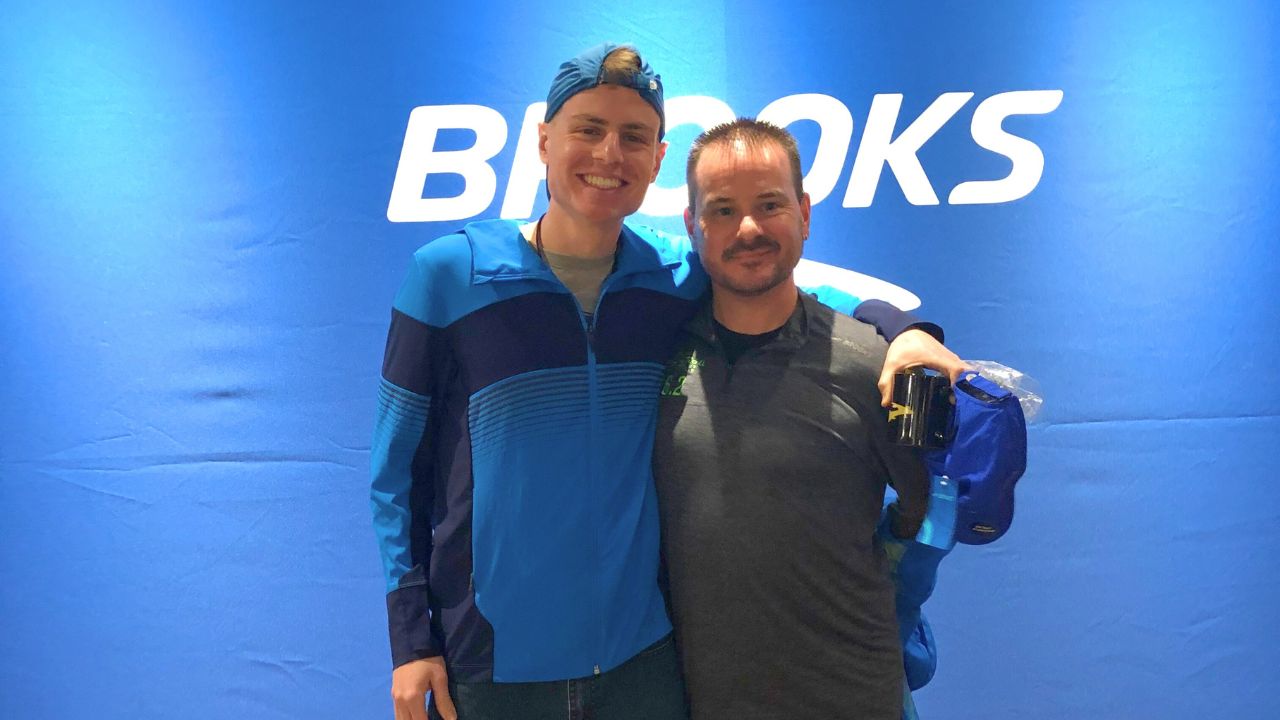
Nick Edinger: The Ministry of Counseling
Nick Edinger '13, MA '18 shares his trek from undergraduate psychology and track accolades to the Olympic trials and a master's in counseling.

 Online Course Login
 myGeneva Student Portal

© Geneva College | All rights reserved