
Our Mission
Chemistry
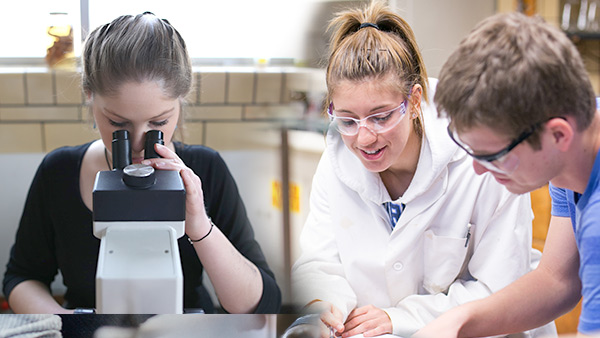
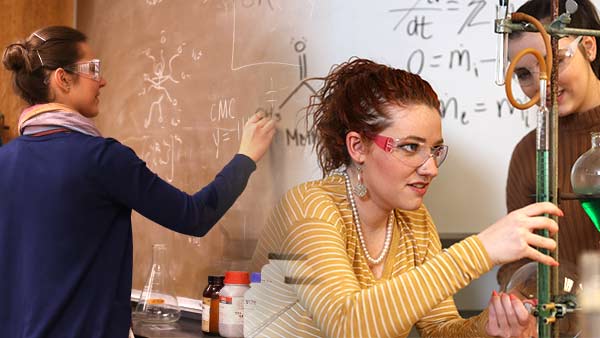
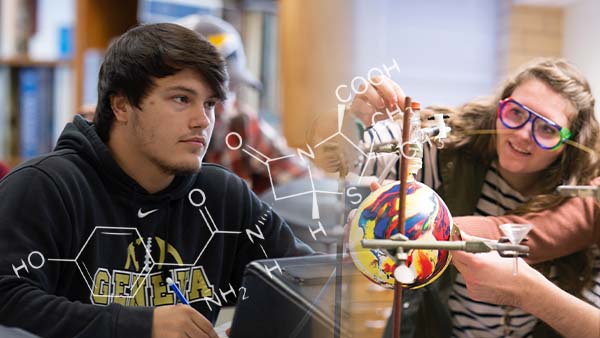
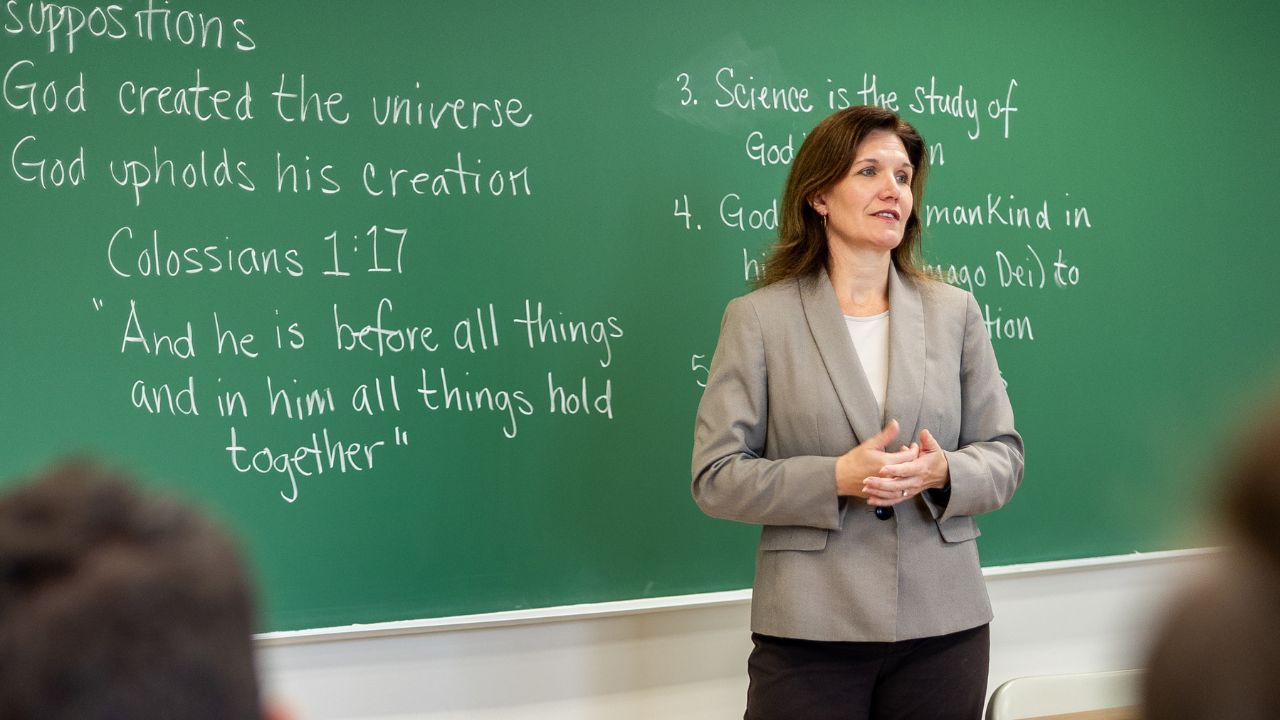
The Geneva College Chemistry Department exists to serve, educate, and mentor students in the disciplines of Biochemistry and Chemistry. We seek for our students to develop a solid competence in the fundamentals of chemistry as defined by the guidelines for an approved program of the American Chemical Society. We also desire to instill an enthusiasm for the process of discovery and research and an awareness of the tremendous responsibility and the sense of awe that comes with understanding and managing the material aspect of God’s creation.
Physics
The mission of the physics program is to provide students with a thorough introduction to the basic theoretical and experimental methods of physics. We seek to develop their ability to engage in critical thinking, to formulate and solve problems, and to communicate clearly and effectively. Our goal is that they would appreciate the complexity and simplicity of the natural world, awe at its Creator, and be prepared for a life of service for His kingdom and glory.
Mathematics
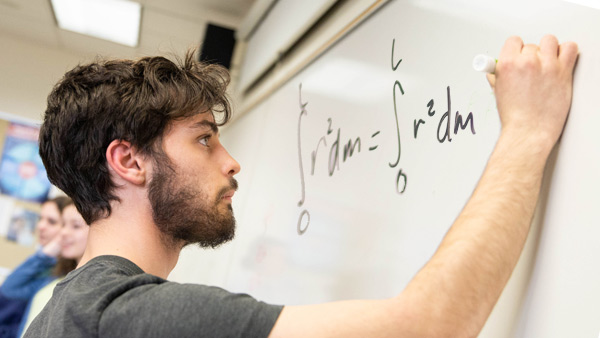
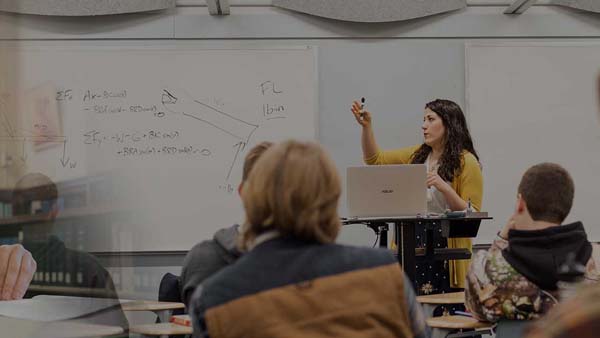
The mission of the Applied Mathematics program is to train our students in the knowledge and skills commonly used in the field of mathematics. We believe that God has spoken his Creation in the language of mathematics: that is, mathematics is consistently embedded in all of Creation. Thus, to study God's Creation, one needs a strong understanding of mathematics. The student is expected to obtain a working knowledge of these skills needed to understand the Creation.
Equipment and Facilities
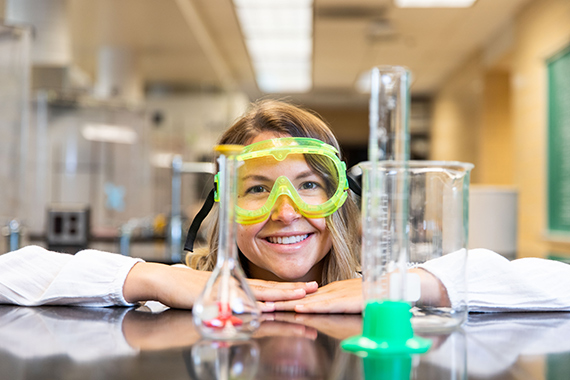
Geneva′s Chemistry and Biochemistry programs are located in the Roy M. Adams Chemistry Center in the renovated Science and Engineering Building. The completely renovated teaching laboratories for organic and inorganic chemistry are equipped with separate ventilation hoods for each student. Utilities include electric, gas, water, and vacuum. Two additional large laboratories provide separate renovated space for physical chemistry and for major instrumentation. A separate large renovated laboratory is specially equipped for chemical research. In addition, the department has a lab classroom, two smaller instrument laboratories, a shop, and four stockroom storage areas.
A listing of the department′s major equipment is given below.
- Jasco V-750 UV-Vis Spectrometer
- Leco TGA-601 Thermogravimetric Analyzer
- Shimadzu Gas Chromatograph with ECD Detector
- 60 MHz Anasazi FT-NMR, nuclear magnetic resonance spectrometer with H-1 and C-13 probes.
- Jasco FT-IR infrared spectrometer with ATR sampling accessory
- Varian ICP-AES atomic emission spectrometer
- Perkin-Elmer fluorescence spectrometer with pulsed source
- Dycor Mass spectrometer, quadrupole instrument
- Varian Aerograph TCD gas chromatograph
- Shimadzu capillary FID gas chromatograph
- Dionex HPLC unit with UV detection
- Varian atomic absorbance spectrometer (flame)
- SpecTech USC-20 gamma ray spectrometer
- EG&G VersaStat 4 electrochemistry station with VersaStudio software
- BioRad gel electrophoresis units
- Jasco circular dichroism spectropolarimeter
- Unico high-resolution UV-vis spectrophotometer with reflectance attachment
- Unico 2100 UV-vis spectrophotometer
- Hitachi UV-vis double-beam spectrophotometer
- PARR bomb calorimeter
In addition, we have a wide variety of smaller instruments and equipment including electronic balances, pH meters, single-beam spectrophotometers, refractometers, polarimeters, rotoevaporators, ovens, furnaces, stirrers, hotplates, thermostat baths, etc…
Computers are an integral part of nearly all of the major instruments in the department, being used for instrument control, data acquisition, data processing, and data display. In addition to dedicated computer laboratories, S&E building has wireless access for internet connectivity.
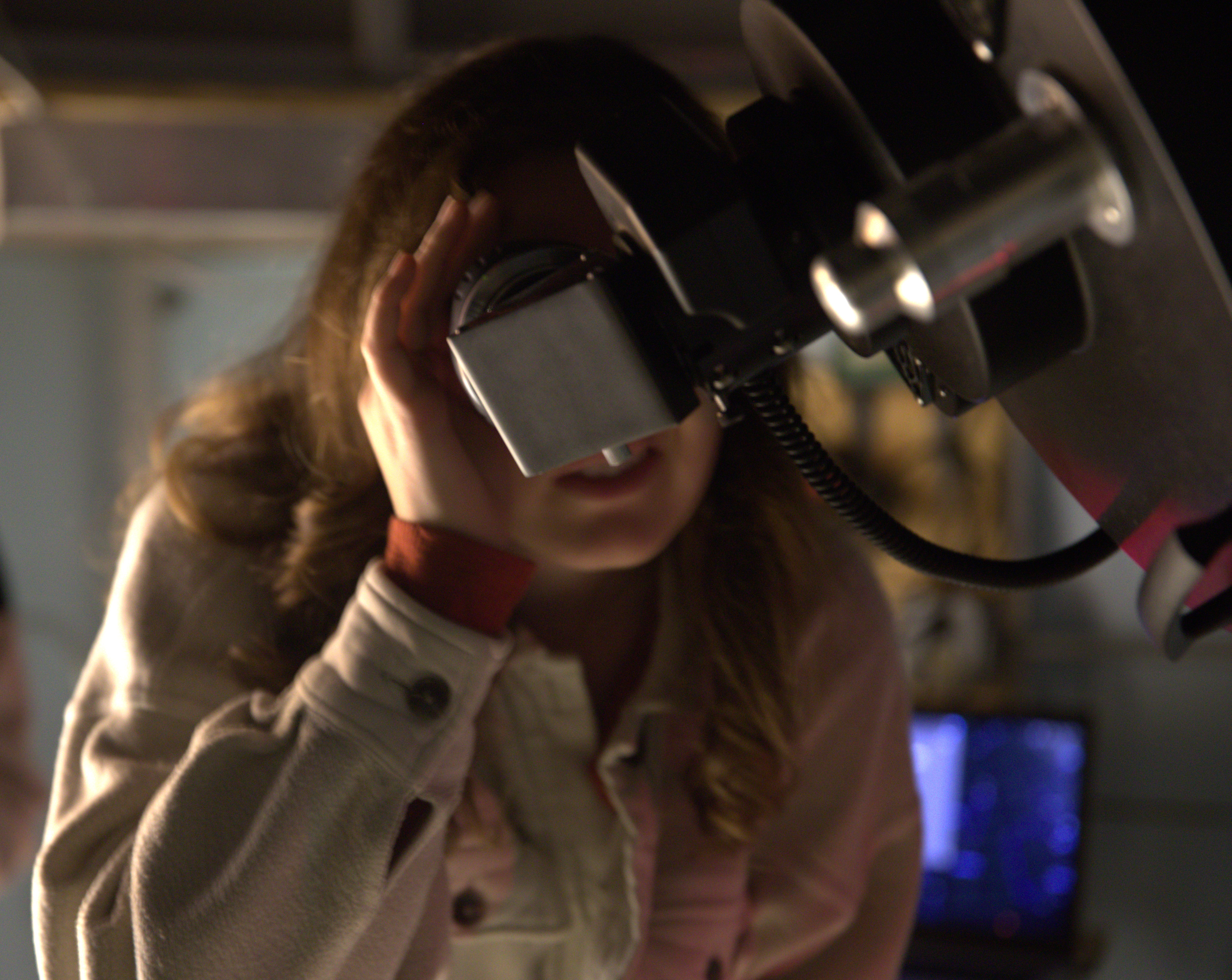
The Physics program is also located on the second floor of the S&E Building. The introductory physics courses occupy a well-equipped laboratory. Laboratory equipment in this laboratory includes: 9-foot airtracks for kinematics studies which are computer interfaced, equipment for laser diffraction and interference studies, acoustics wavetubes, magnetic field mapping, electrical circuit building with voltmeters and oscilliscopes to measure key parameters, spectral analysis, and radioactive decay studies. In addition, there are dedicated advanced laboratories available for physics work.
- a set of blackroom laboratories for advanced optics studies including interferometry and a thermal imaging video camera.
- an advanced laboratory for higher level experiments in physical measurement.
- a gamma ray spectrometer laboratory area.
- an electronics laboratory for analog and digital circuit development and study – with LabView simulation.
The Physics program also is able to use any of the advanced instrumentation available in the Chemistry and Engineering programs. The Rapp Technical Center includes machine shop and rapid prototyping equipment which can be used by physics students.
Physics research involving computer simulation and modeling can be done in the general computer labs or on dedicated machines in the Physics laboratories.

 Online Course Login
 myGeneva Student Portal
